 Sleightful
Escapology
Key features
Classic stage and illusion performance art with broad audience appeal
Combines physical skill, showmanship, and theatrical suspense
Can be adapted for various performance contexts (stage, parlour, festivals)
Requires significant practice and safety precautions
Often involves restraints like handcuffs, straitjackets, or confinement devices
Builds tension and narrative through the illusion of danger
Can be performed as standalone act or integrated into larger shows
Suitable for family-friendly or dramatic presentations depending on approach
Pros
High-impact visual spectacle that creates memorable moments
Builds strong audience engagement through suspense and tension
Versatile - can be adapted for different venues and audience sizes
Established classic of magic with proven audience appeal
Can be combined with other illusions for stacked moments in a show
Cons
Requires significant physical conditioning and practice time
Involves safety risks that must be carefully managed
May require specialized equipment and setup
Traditional approaches can lack believable jeopardy if not well-presented
Physical demands may limit who can perform it effectively
Effect
Escapology is a stage magic performance. A performer is restrained by locks, chains, or a straitjacket. The performer then escapes from these restraints, often within a set time limit. The audience sees a display of apparent physical skill and daring.
Full details
Escapology is a branch of stage magic focused on escapes. Performers use various restraints. Common restraints include handcuffs, ropes, chains, locks, and straitjackets. The escapes are often presented as a challenge. The performer may be locked inside a trunk or tied to a chair. Music and a visible clock can increase tension. The escape happens in full view. Success depends on the performer's skill and method. The performance creates a sense of risk and excitement.
Who should consider the trick
Stage magicians should consider escapology. It is for performers who do shows for large audiences. It fits well in a longer set of stage illusions. It is good for magicians who want a dramatic, physical piece. Family-friendly show performers can use it. Luke Oseland notes that family shows can be bold. Escapology adds a strong visual element. It is also for magicians who can reinvent their act. Chris North included escapology across different performance phases in his long career.
Information on how difficult it is to perform
Escapology is difficult to perform. It requires physical practice and skill. Performers must master the methods for each type of restraint. Timing and presentation are critical. Building believable tension for the audience is a key challenge. Luke Oseland points out that traditional escapology often lacks believable jeopardy. Creating a sense of real risk is part of the performance difficulty. It is not a simple trick to add to a show. It demands dedicated rehearsal and a confident stage presence.
What magicians say
Magicians discuss escapology in the context of stage performance. Luke Oseland includes it in his framework for high-impact shows. He offers a fun alternative to traditional escapes. His version involves life-ruining stakes with a straitjacket. He focuses on creating multiple memorable moments. Stephanie Clarke discusses the challenges of performing escapology. She transitioned from dance to magic. She emphasizes the importance of stage presence and choreography for such acts. Chris North lists escapology among his essential desert island tricks. His long career shows escapology's lasting appeal in a varied stage act. He reinforces that successful acts often require reinvention, and escapology can be a part of that evolution.
What people are saying about Escapology
Chris North says...
North's Desert Island Tricks feature iconic illusions including Escapology, which he considers essential for his long-standing career in magic.
Luke Oseland says...
He argues that traditional escapology often lacks believable jeopardy and offers a fun alternative involving life-ruining stakes with a straitjacket.
Stephanie Clarke says...
Stephanie discusses the challenges and rewards of performing illusions and escapology, highlighting her passion for this performance art.
Other videos

Luke Oseland's Desert Island Tricks
AlakazamMagicUK mentioned this magic trick in this video.
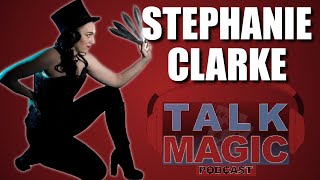
Stephanie Clarke - Amethyst Magic, Illusionist & Escapology | Talk Magic
magic-tv mentioned this magic trick in this video.
Chris North's Desert Island Tricks
AlakazamMagicUK mentioned this magic trick in this video.