 Sleightful
Pegasus Page by Arthur Emerson
Created by: Arthur Emerson
Key features
Versatile effect that can be performed in close-up, parlour, or stage settings
Often included as part of larger magic systems like book test series or multi-effect magazines
Emphasizes visual impact and audience participation, with reframing options for mind-reading presentations
Can be combined with ordinary books or other props to extend performance possibilities
Minimal memorization required in many versions, prioritizing ease of use
Suitable for family-friendly shows and can create multiple high-impact moments
Pros
Strong visual and mental impact that leaves a lasting impression on audiences
Flexible presentation options allow for customization to different performance styles
Often part of versatile systems that offer multiple routines and effects
Can be performed with spectators anywhere in the room, enhancing stage presence
Reframing options make it highly participatory and engaging for spectators
Cons
May require specific gimmicked props or magazines, limiting impromptu performance
Some versions might not be fully examinable by spectators, reducing organic feel
Included as part of larger collections, which might be costly if only interested in this single effect
Performance may require practice to seamlessly integrate with other effects in a set
Effect
The Pegasus Page is a mentalism effect. A spectator chooses a word from a book or magazine. The performer then reveals that word in an impossible way. The word can appear on a different page, on a separate piece of paper, or in the spectator's own mind. The effect creates a strong moment of apparent mind reading or psychic ability.
Full details
The Pegasus Page is a classic mentalism routine. It is often built into specially prepared books or magazines. These props look ordinary to the audience. The performer does not need to see the spectator's chosen word. The method allows the performer to know the word or to control its selection. The effect can be performed in different settings. It works for close-up magic and stage shows. Versions of the Pegasus Page are included in several magic products. These include Josh Zandman's Universal Monsters book test series and Chris Philpott's Odyssey magazine.
Who should consider the trick
The Pegasus Page is good for mentalists and magicians. It is suitable for performers who want a strong mind reading effect. It works for family shows and adult audiences. Luke Oseland uses it in his stage shows. He reframes it so spectators appear to read each other's minds. This makes the trick more participatory. Bill Abbott includes it in his repertoire for its playful and engaging quality. The trick is also good for performers who use book tests. The Universal Monsters series and Odyssey magazine offer built-in versions. These products minimize the need for memorization.
Information on how difficult it is to perform
The difficulty depends on the version. Some versions require no memory work. The method does the work for the performer. Josh Zandman's book test series is designed for ease of use. Michael O'Brien states it "prioritizes ease of use, minimizing the need for memorization." The props are made to reveal information to the performer. Basic performance skills are still needed. The performer must present the effect clearly. Managing spectator interaction is important. The method itself is not technically difficult. The challenge is in the presentation and timing.
What magicians say
Magicians praise the Pegasus Page for its impact and versatility. Luke Oseland includes it in his professional set. He uses it to create a moment where spectators seem to read each other's minds. Michael O'Brien reviews the built-in version in the Universal Monsters books. He calls it "a built-in version of the classic Pegasus Page effect, occurring within the spectator's hands." Bill Abbott performs it as part of his versatile routines. Reviewers of the Odyssey magazine note its inclusion as a key feature. One reviewer calls it "a strong mentalism effect with visual elements." Jorge Garcia, a mentalist known as 'The Jack,' features his version on his DVD. The effect is recognized as a powerful tool for creating a memorable moment of magic.
What people are saying about Pegasus Page
Bill Abbott says...
The playful 'Pegasus Page' highlights versatility and the ability to connect with any crowd, combining psychology with magic to make it feel personal and thrilling.
Chris Philpott says...
Odyssey includes Arthur Emerson's 'Pegasus Page' as one of ten effects, with a luxury magazine design that prioritizes believability and realism for powerful mentalism performances.
itsallthingsmagic reviewer says...
The 'Pegasus Page' is a strong mentalism effect with visual elements, praised for its value and the unique experiences it offers within a versatile, high-quality magazine system.
Jorge Garcia says...
In my version of Pegasus Page, a spectator's chosen word appears in an impossible way, showcasing powerful mentalism routines with clear explanations for professional insights.
Luke Oseland says...
Pegasus Page is reframed so that spectators appear to read each other's minds, enhancing the participatory experience. It exemplifies principles of stacked moments and visuals that 'travel across any crowd.'
Michael O'Brien says...
The built-in version of Pegasus Page occurs within the spectator's hands, and the system allows multiple minds to be read simultaneously, creating a visual spectacle with flexibility for any room setup.
Performance videos

Bill Abbotts Desert Island Tricks
AlakazamMagicUK mentioned this magic trick in this video.
Review videos

Magic Review - 10 Tricks In 1! (Odyssey by Chris Philpott)
itsallthingsmagic mentioned this magic trick in this video.

Universal Monsters Collection (Frankenstein) by Josh Zandman
MurphysMagicSupplies mentioned this magic trick in this video.
Promotional videos

Odyssey by Chris Philpott
MurphysMagicSupplies mentioned this magic trick in this video.
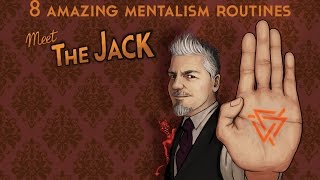
Alakazam Presents Meet The Jack By Jorge Garcia
AlakazamMagicUK mentioned this magic trick in this video.
Other videos

Luke Oseland's Desert Island Tricks
AlakazamMagicUK mentioned this magic trick in this video.