 Sleightful
Switch by Heirloom Workshop, John Lovick, Edouard Boulanger, and Daryl
Created by: Heirloom Workshop, John Lovick, Edouard Boulanger, Daryl
Where to buy
 | Ellusionist | Switch | $18.70 | 🇺🇸 Shop |
 | Alakazam Magic | 4 Switch by Pierre Acourt & Magic Dream | £43.58 | 🇬🇧 Shop |
Key features
Fundamental sleight-of-hand technique essential for card, coin, and prop magic
Can be performed as self-working routines or require advanced sleight of hand
Versatile application across multiple magic genres (close-up, mentalism, parlour)
Often relies on misdirection, timing, and natural handling for deception
Many marketed versions include gimmicks or specific props for enhanced effects
Suitable for performers of all skill levels from beginners to experts
Pros
Core technique that forms the foundation for countless magic routines
Highly versatile—applicable to cards, coins, bills, and everyday objects
Some versions are self-working and require no advanced sleight of hand
Creates strong visual transformations that are immediately impactful
Can be adapted for various performance contexts and audiences
Many resources available for learning different variations and applications
Cons
Requires practice to execute smoothly and without detection
Some versions depend on specific gimmicks or props that may need replacement
Advanced applications demand significant skill development
May become predictable if overused in routines without variation
Certain methods require precise angles or performance conditions
Effect
The trick called Switch creates a visual transformation. A spectator sees one object. The magician performs a simple action. The object instantly changes into a different one. This can be a card changing color or value. It can also be a bill changing denomination. In other versions, it can be a sponge ball changing color or a mug of coffee turning into cash. The change happens in plain sight. The effect is direct and surprising.
Full details
Switch is a fundamental sleight. The method involves secretly exchanging one object for another. This exchange is the switch. The move is hidden by timing and natural hand motions. Some versions use a gimmick to aid the illusion. For example, a special card or a prepared prop. Other versions rely only on sleight of hand. The routine is often short. It is designed for quick, powerful impact. Presenting it as a challenge, like "bet you can't catch it," can increase engagement. Using a borrowed object, like a bill, makes the effect more deceptive.
Who should consider the trick
Switch is for magicians who want a strong visual trick. It is good for performers who work in walkaround or social settings. The trick is versatile. It can be adapted for cards, coins, bills, or small objects. Beginners can learn self-working versions that require no sleight of hand. Intermediate and advanced magicians can study the sleight-of-hand versions to refine their technique. It is a useful tool for building other routines. As SeanDevine notes, these moves are core utilities for building powerful card magic.
Information on how difficult it is to perform
The difficulty varies. Some versions are self-working. These use a gimmick or a simple setup. They require no advanced skill. As seen in the Happy Birthday card trick summary, the method is entirely self-working. Other versions require practice. They depend on clean sleight of hand. The key is to make the switch look like a casual gesture. Misdirection and timing are crucial. itsallthingsmagic states that fast, confident execution sells the effect. Oscar explains that repetition is crucial to selling the illusion. With practice, the moves can become smooth and convincing.
What magicians say
Reviewers highlight the trick's visual impact and practicality. itsallthingsmagic says the trick is "perfect for social media or quick walkaround magic" and that "misdirection and timing are key." Oscar calls it a "fantastic addition to any magician's repertoire due to its simplicity and visual impact." Regarding bill changes, EruditeMagic recommends John Lovick’s 'Switch' as a comprehensive resource, calling the bill change "a staple in any magician's repertoire." For card magic, SeanDevine teaches the switch as a fundamental sleight, emphasizing that "success relies just as much on the performer's confidence and audience management." The trick is praised for being a strong foundational piece.
What people are saying about Switch
AlakazamMagicUK says...
The video highlights the 'Switch' trick by Heirloom Workshop, a smooth and deceptive sleight-of-hand move that makes objects appear to change places instantly.
BigBlindMedia says...
The title hints at the possible inclusion of a fuse move, a change, a switch, and a rub-a-dub flourish, all classic coin sleights that, when combined fluidly, create a visually stunning and rhythmic routine.
DANIELmadison says...
Switches are essential in many routines, from card magic to coin work, allowing magicians to control or transform objects invisibly. [...] The title suggests a focus on clean, deceptive handling—a skill every magician should refine.
EruditeMagic says...
The creator specifically recommends John Lovick’s Switch as a comprehensive resource for learning multiple variations of the effect. The trick relies on misdirection-free handling—slow, deliberate folds and unfolds sell the illusion of a genuine transformation.
itsallthingsmagic says...
The title 'You Blink, I Win!' implies that misdirection and timing are key—forcing the spectator to focus on the wrong moment enhances the illusion. A fast, confident execution sells the effect, making it feel like pure skill rather than a trick.
magic-tv says...
Craig Petty showcases a routine called 'Switch' using Edouard Boulanger's 'Red' gimmick. The trick involves a transposition between a red and yellow sponge ball, with Craig humorously breaking the 'rules' of magic by repeating the trick and explaining its mechanics.
MurphysMagicSupplies says...
The method is entirely self-working, requiring no sleight of hand, which makes it accessible to magicians of all skill levels. The core principle revolves around a clever one-way force and a simple but effective switch of the message card.
oscar says...
The trick centers around the seemingly impossible reappearance of a single playing card. [...] The foundation of the trick is a palm and a switch. Repetition is crucial to selling the illusion.
SaturnMagicShop says...
The demonstration strongly suggests a switch of some kind. The quick, clipped finger movements while covering the mug are likely crucial to the execution, allowing for a seamless replacement of the coffee with the money.
SeanDevine says...
For the switch, the emphasis is likely on achieving a clean exchange of one card for another under seemingly impossible conditions. [...] The success of a switch relies just as much on the performer's confidence and audience management as it does on the technical execution.
Performance videos

Fuse Change Switch Rub A Dubstep #magictrick
BigBlindMedia mentioned this magic trick in this video.
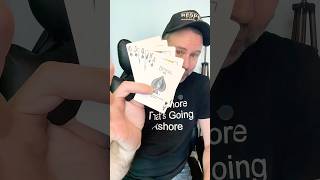
You Blink, I Win! #magician #magic #magictricks #poker #skills #sleightofhand #cardtrick #fyp
itsallthingsmagic mentioned this magic trick in this video.

SWITCH
DANIELmadison mentioned this magic trick in this video.

Switch - Routine Using Red by Edouard Boulanger | Sponge Ball Transpo
magic-tv mentioned this magic trick in this video.
Review videos

2024 Magic Book Rankings
EruditeMagic mentioned this magic trick in this video.

Magic books for every budget
EruditeMagic mentioned this magic trick in this video.
Promotional videos

Switch By Heirloom Workshop
AlakazamMagicUK mentioned this magic trick in this video.
Tutorial videos

How to do the worlds best Happy Birthday Card Trick!! | Saturday Sorcery Daryl tutorial
MurphysMagicSupplies mentioned this magic trick in this video.
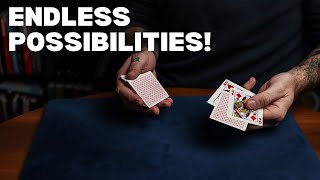
A Switch, Force, and Control Tutorial!
SeanDevine mentioned this magic trick in this video.

Visual Card Trick Revealed 😲
oscar mentioned this magic trick in this video.

Mojoe Saturn Magic 60 Seconds
SaturnMagicShop mentioned this magic trick in this video.

You can learn this trick in a book
EruditeMagic mentioned this magic trick in this video.